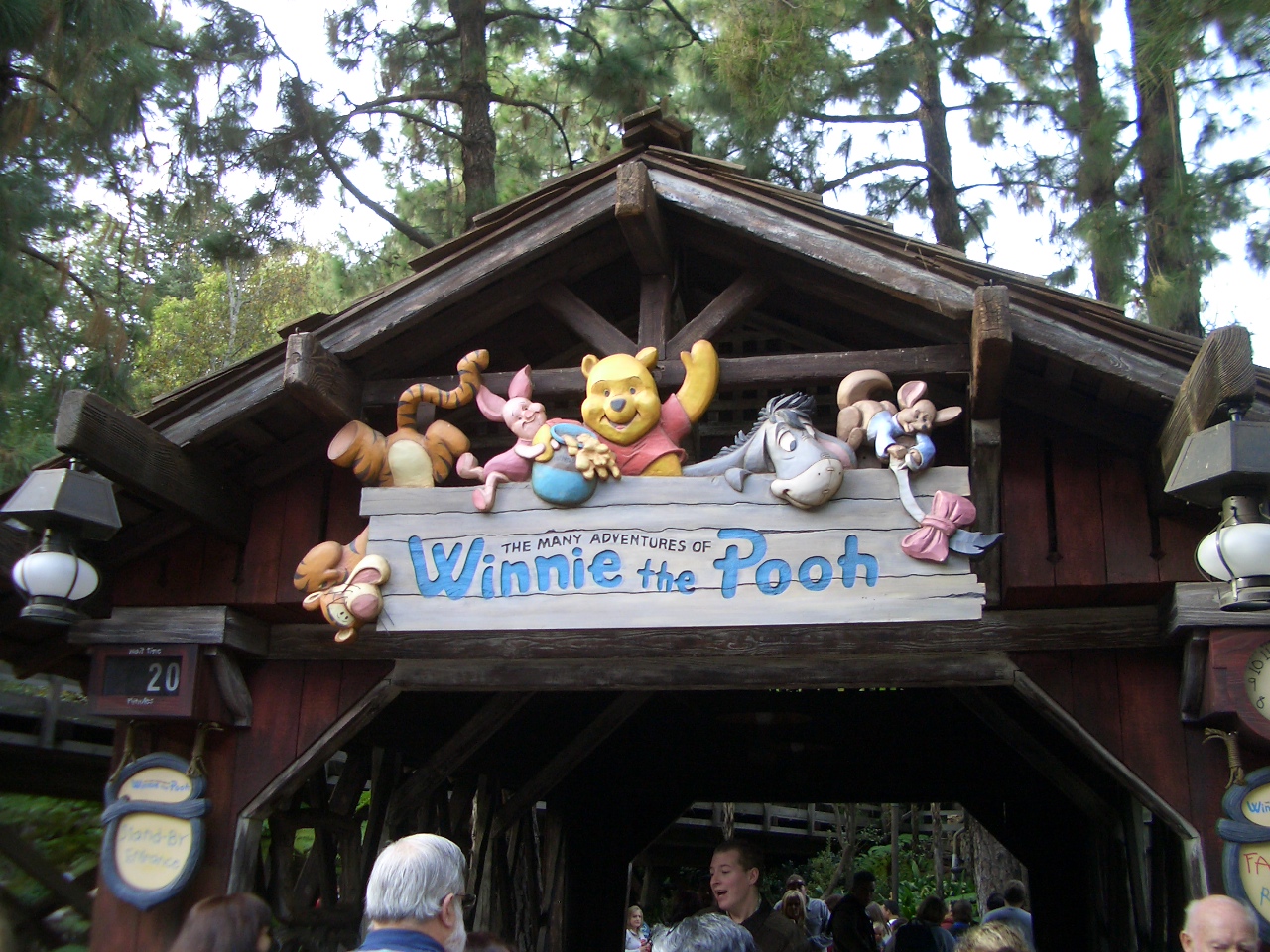
Raymond Kinman is an artist. Specifically, a master woodcarver. He is also famous for his carvings that have been used at Disney theme parks. Yes, Disneyland actually uses hand carved signs!
Raymond Kinman carved sign at Disneyland, 2003. Photo from my DisneyFans.com photo archives.
I had no idea when I took that photo at Disneyland in 2003 that this was actually a hand carved piece. I guess I just assumed it was some fiberglass mold:
You can learn more about Mr. Kinman and see photos of some of his Disney projects at this site:
Today’s topic is, once again, A.I. I have written about A.I. While I hate A.I. slop as much as anyone, I see great value in it as a tool when used by artists, musicians and other creative people. Just like a great guitar can’t make a bad guitar player sound good, a great A.I. doesn’t make a random person able to create works of art or the next Top 40 hit. (Though, since art and music tastes are subjective, it could certainly produce something you really love to see or listen to. There have been many “bad” songs that have gone to #1, and many “bad” paintings that have become legendary.)
But I digress. Again.
Here is Mr. Kinman’s Facebook group where he shares updates:
And here is what he recently posted about A.I. I think this is worth a read as it comes from a master artists with 50+ years of experience.
I’m going to take on something controversial here, so if you’re interested, you’re going to have to slow down and take a minute to read this…’cuz I’d really like to hear your thoughts. I’m going to make the case for why I think using AI can actually be a very good thing for artists.
First, I’m not unaware of the downside. If you think AI is a bad thing for the world, you’re not wrong. I have a fairly decent understanding of the technology and how it works, at least from a layman’s point of view, and I can see nearly an infinite number of ways this could go wrong for humanity. Yeah, the environmental impact. All of it. There is an astonishing upside too, but I’m going to leave that argument alone for now because that’s a rabbit hole I don’t want to go down.
Instead, I want to make the case for what AI is doing FOR the arts and how this has the potential to become a very good thing for artists.
Think about what happened when photography was invented.
Before the camera, one of the primary ways an artist could make a living was painting portraits of wealthy and powerful people. If you wanted a convincing image of yourself, you needed somebody who had spent years learning how to reproduce the human face, the human body, clothing, light and texture with extraordinary accuracy. Then photography came along and suddenly a machine could do that job far faster and more accurately.
You can imagine how frightening that must have been for painters. Why would anybody pay me to spend weeks or months painting a portrait when they can have a photograph taken in minutes? This spells disaster for the artist. The end of painting.
But it wasn’t.
Something much more interesting happened. Photography freed artists from having to spend their careers proving that they could reproduce reality. Artists were suddenly free to explore what else painting could become. Van Gogh, Matisse, Picasso and countless others didn’t have to compete with the camera. They could ask entirely different questions about art. Photography didn’t kill painting. It helped liberate it.
I think AI may be doing something similar, and I want to show you what that looks like in my own work.
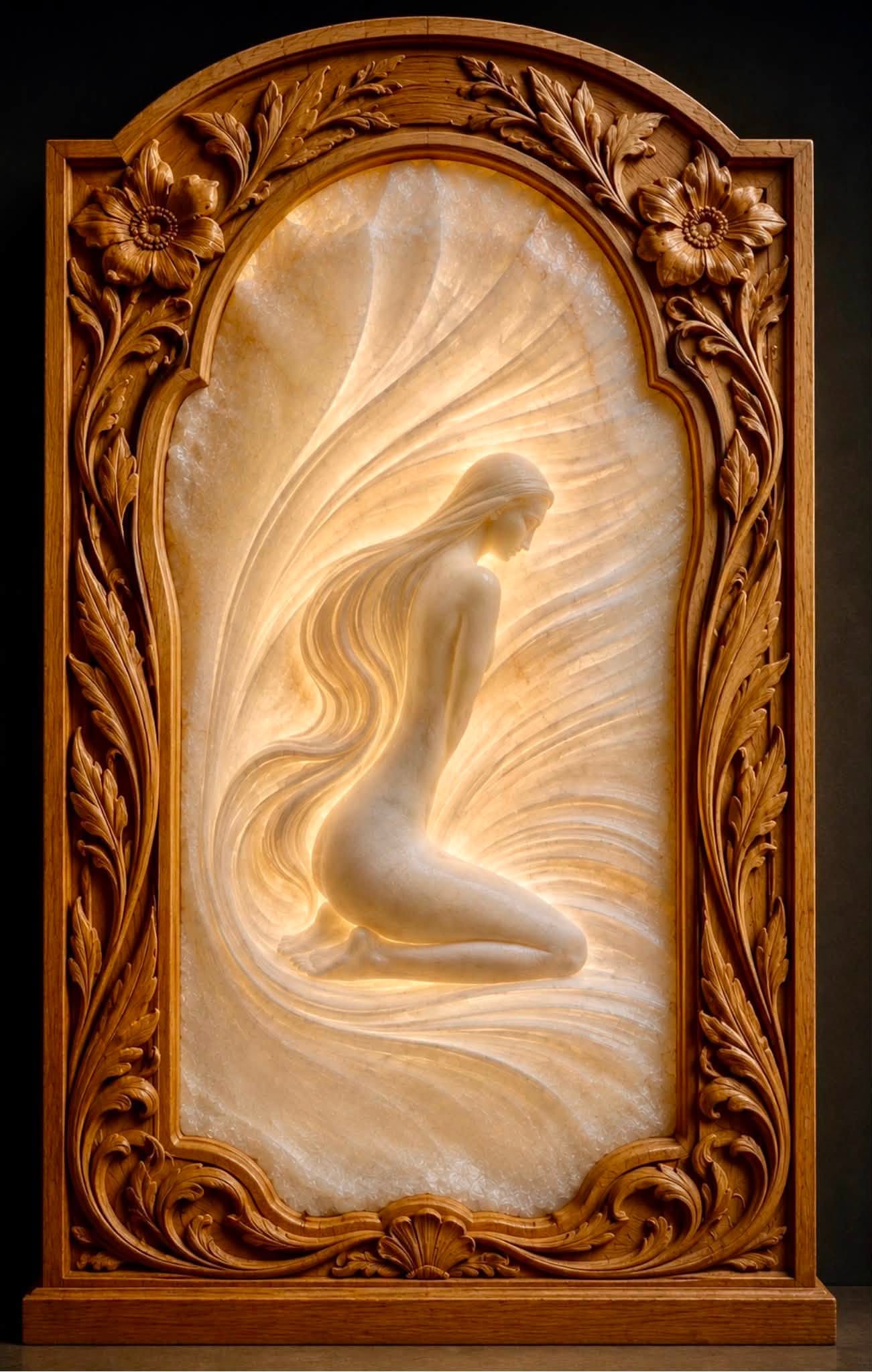
Stone and wood complement one another beautifully, and I had this idea I wanted to explore. I wanted to carve a translucent alabaster relief of a beautiful, tasteful female form, backlit so the stone would glow in the shallow areas, and set it inside a deeply carved wooden frame. I’ve never done any stone carving before, my work has always been in relief woodcarving.
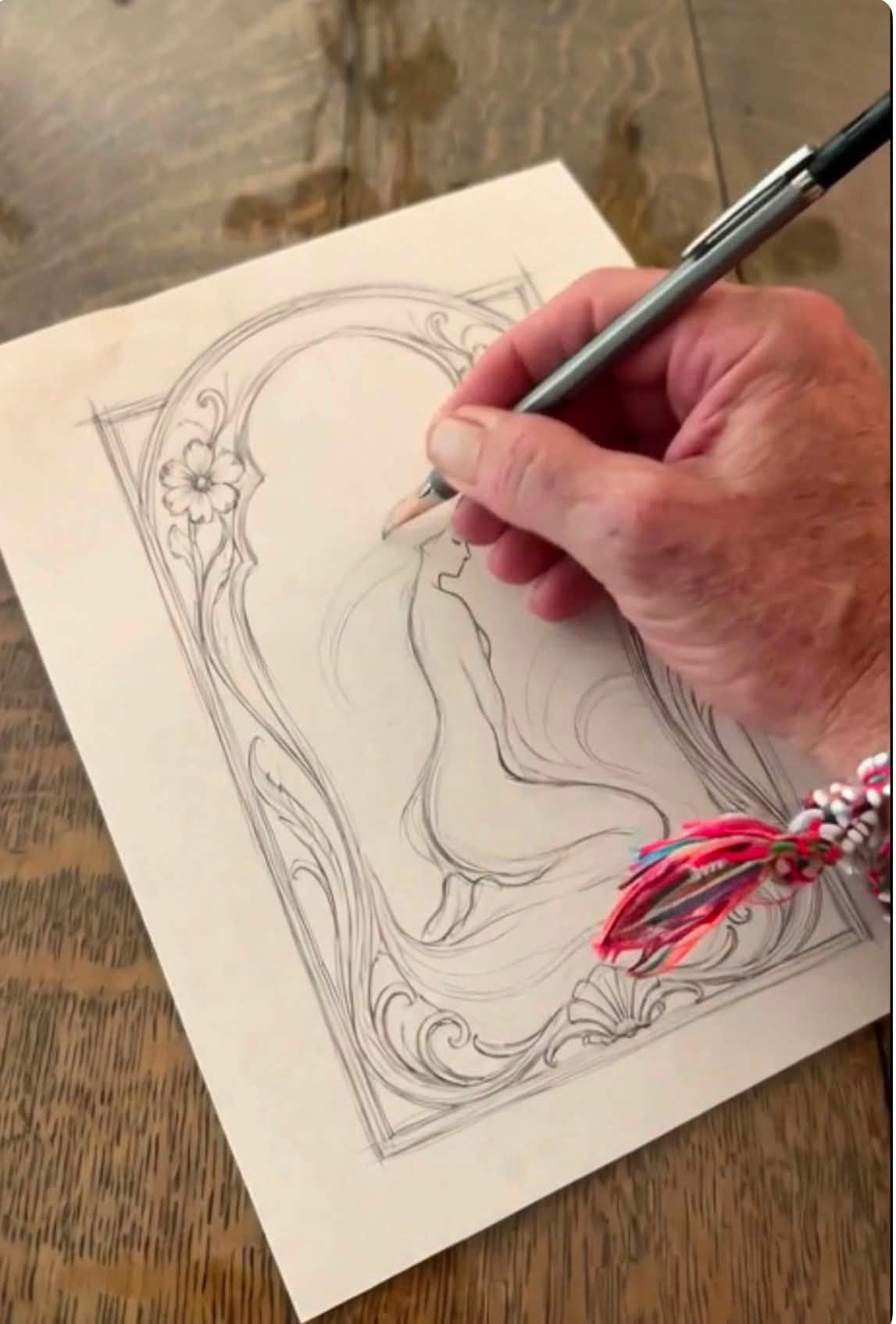
The problem is that I don’t draw very well, and I’m certainly not an illustrator. I can sketch a little, enough to work out my ideas anyway. Everything starts there. The human touch. So I made the little sketch you see here. Then I took the idea to AI.
Screenshot
I asked it to help me visualize what I was imagining. I asked it to push back on my own biases and show me what I wasn’t seeing. I asked it to show me possibilities I hadn’t considered. I asked what I needed to learn about carving stone, what tools I might need, how translucent alabaster behaves with light, and what might actually be possible.
In other words, I asked it to help me see. And it does this astonishingly well.
Screenshot
The second image is not the sculpture. It isn’t even the finished design. It’s a working model of an idea. That distinction is super important to me. Now I have something I can look at, question, change and develop. I can take this model to a real illustrator and have a human being refine it into a workable design. Then I can take that design into my shop and carve the actual sculpture entirely by hand. I’ll be the one holding the tools. I’ll be the one reading the stone. I’ll be the one making the cuts and figuring out what the material will and won’t allow me to do.
I’ve spent nearly fifty years learning how to draw, carve, design and see. AI hasn’t replaced any of that experience. What it has done is give me a way to explore ideas and understand them at a speed I never could before.
If I don’t understand composition, AI can give me a pretty picture. If I DO understand composition, it can give me hundreds of possibilities to examine, reject and develop. If I don’t understand carving, it can give me an image of something that looks like it could be carved. If I’ve been carving for fifty years, I can look at that image and start asking whether the forms actually make sense in wood or stone.
The technology doesn’t eliminate the need for artistic knowledge. In many ways, it makes that knowledge more valuable because I still have to know what I’m looking at. So I’m not interested in having AI make my art for me. I’m interested in using it to expand what I’m capable of imagining.
Photography didn’t end painting. It changed what painting could be. Maybe AI is going to do the same thing for all of us.
For me, this is what I mean by The Human Touch. The tech helps me see farther than I could see before, but eventually the idea comes back into human hands.